Zonated mechanosensing by PIEZO1 controls liver regeneration
个人文献精读 Research Note,用于梳理论文证据链、图像逻辑、supplementary data 与可迁移研究思路。
Ying Zhang; Yuzhuo Sun; Guangkui Xu; Yue Wu; Zhijun Shi; Zhuo Chang; Junjun Liu; Kaidan Pang; Siyu Liu; Han Wang; Weixin Rong; Zehua Shao; Xingqian Liu; Yu He; Yang Yan; Bin Zhou; Zuyi Yuan; Xu-Feng Zhang; Stefan Offermanns; Shengpeng Wang
Science 393, eaef0825 (2026)
Copyright 2026 the authors; exclusive licensee AAAS。公开版按保守转载边界处理。
Morgen · tomorgene.com
公开导读版:5 张低分辨率代表图 + panel-group 占位索引;robots noindex,nofollow。
一句话总结
肝损伤后,mid-lobular zone 2 的 DPP4+ hepatocytes 成为机械力热点;这些细胞通过高表达 PIEZO1 感知 hypertrophy-induced tension / stiffness,并经 Ca2+-NFATC3 / IGFBP2 轴启动增殖,从而驱动 zonated liver regeneration。
证据链阅读顺序
- Marker gate:Fig.1 和 Fig. S1-S2 先定义 DPP4+ hepatocytes 的再生相关性、hepatocyte specificity 与 zonation context。
- Lineage gate:Fig.2 和 Fig. S3 证明 DPP4+ hepatocytes 在 PHx 后真实扩增并形成 regenerative pool。
- Mechanical premise:Fig.3 和 Fig. S4 证明 DPP4+ zone 2 是 membrane tension、contractility 与 tissue stiffness 的 hotspot。
- Mechanosensor identity:Fig.4 把 PIEZO1 的空间定位、Ca2+ response 与 stiffness response 连起来。
- Necessity:Fig.5 和 Fig. S5-S7 用多套遗传/药理/损伤模型证明 PIEZO1 必要。
- Sufficiency and effector:Fig.6 与 Fig. S8-S12 证明 PIEZO1 GOF、IGFBP2 rescue、NFATC3 和 YAP/TAZ branch。
名词解释
核心词支撑主图阅读;模型词帮助定位实验场景;方法词用于回到图注、methods 和 supplementary tables 检索。
核心机制 读懂主图必备
肝小叶沿 portal-to-central axis 呈现空间功能分区。本文重点是 mid-lobular zone 2 的再生优势,但不要把 zone 2 写成单一均质群体。
DPP4 标记一个 zone 2-enriched regenerative hepatocyte pool。它是 enrichment marker,不是绝对纯的 zone 2 marker。
用 tamoxifen 激活 Dpp4-CreERT2 标记 DPP4-lineage cells,再在 PHx 或 homeostasis 中追踪它们是否扩增和跨 zone 分布。
这里指损伤后能贡献增殖和肝质量恢复的 hepatocyte population。Fig.2 的关键是从 marker 过渡到真实 lineage contribution。
PHx 后 hepatocytes 先发生 cell size increase。本文把 hypertrophy 视为产生 membrane tension / tissue stiffness 的物理前提。
不是一个单一指标,而是 p-MLC2/actin、FLIM membrane tension、AFM stiffness 等多层证据共同指向 DPP4+ zone 2。
Mechanosensitive ion channel。本文把 PIEZO1 放在 DPP4+ zone 2 hepatocytes 的空间化 mechanosensor 位置,而不是泛泛讨论力学通路。
PIEZO1 activation 后的 calcium signal 可驱动 NFATC3 相关转录响应,是从 channel activity 到 gene program 的中间桥。
本文提出的 downstream effector。读 Fig.6 与 Fig. S8/S12 时,要把 IGFBP2 看成 PIEZO1-GOF 与 proliferation/rescue 之间的功能节点。
经典 mechanotransduction branch。本文中它是重要支路或部分 downstream,不应替代 PIEZO1-NFATC3-IGFBP2 主轴。
实验模型 看图时定位场景
Partial hepatectomy,用于诱导肝再生并测试 lineage expansion、hepatocyte proliferation、liver-to-body weight recovery。
四氯化碳急性肝损伤模型,用于检验 PIEZO1 轴是否能从 PHx 外推到 chemical injury and repair。
重复 CCl4 损伤模型。Fig. S7 用它测试 PIEZO1 是否也参与持续损伤环境中的 proliferative response。
在 DPP4-lineage context 下删除 Piezo1,用来回答 DPP4+ hepatocytes 内 PIEZO1 是否必要。
Alb-Dre; Ccnd1-RSR-CreERT2 等组合把 perturbation 更靠近 zone 2 hepatocytes,降低 DPP4 marker 边界带来的解释风险。
肝细胞偏向的 AAV knockdown 系统,提供 genetic model 之外的 acute Piezo1 loss-of-function 证据。
在 DPP4-lineage cells 中表达 gain-of-function PIEZO1,用于测试增强 mechanosensing 是否足以促进 regrowth/repair。
在 Piezo1 loss 或 GOF context 中补 IGFBP2,用来判断 IGFBP2 是否能解释下游 proliferative phenotype。
方法与数据口径 遇读再查
Yoda1 是 PIEZO1 agonist;Dooku1 抑制 Yoda1-mediated activation。读 Fig.4/S5 时要区分药理激活和遗传必要性。
用 membrane-order-sensitive probe 读取 membrane tension / lifetime。它回答的是细胞膜层面的力学状态。
Atomic force microscopy,用于测 tissue elastic modulus、surface tension、relaxation time 等组织尺度力学参数。
p-MLC2 和 cortical actin 反映 contractility / cytoskeletal tension,是 Fig.3 中连接细胞骨架与机械状态的读出。
通过不同 stiffness 的培养基质测试 hepatocytes 对 mechanical stiffness 的响应,并与 Yoda1/Dooku1/siPIEZO1 组合解释。
三类 proliferation readouts:EdU/BrdU 标记 DNA synthesis,Ki67 标记 cycling cells。跨图比较时要注意时间点和模型。
从特定 zone 或区域切取组织用于 expression analysis,帮助把 mechanical hotspot 与 mechanotransduction gene expression 连接起来。
用于 marker discovery、zonation context 和 human/mouse comparison。它提供线索,但因果判断仍依赖 lineage 和 perturbation。
大表主要支撑 DPP4、IGFBP2、HAMP、EGFR、NFATC3 和 zonation expression。页面只保留 sheet-level inventory,不铺原始数据。
报告规范与复现实验上下文,不是主证据链的一部分,但应在 Source Data / reproducibility context 中保留入口。
科学问题与总体模型
这篇文章问的是:肝脏再生为什么具有 zonation,也就是为什么某些 lobular zone 的 hepatocytes 更优先增殖?这种空间化增殖是否由局部机械力通过特定 mechanosensor 触发?
定义再生相关 hepatocyte pool。
PHx 后 hypertrophy、tension、stiffness 上升。
空间限制的 mechanosensor 读取 mechanical state。
Ca2+ 信号转成 proliferative gene program。
促进 PHx 和 CCl4 injury 后的 zonated regeneration。
核心写作边界:人类数据主要是 reanalysis / spatial transcriptomic support,因果链核心实验在小鼠;IGFBP2 rescue 很强,但 autocrine、paracrine 和 niche remodeling 的边界仍需谨慎。
Fig.1 - DPP4 标记增殖性 hepatocyte subpopulation
marker gate先建立 DPP4+ hepatocytes 与增殖、zone context 和 lineage tool 的关系。
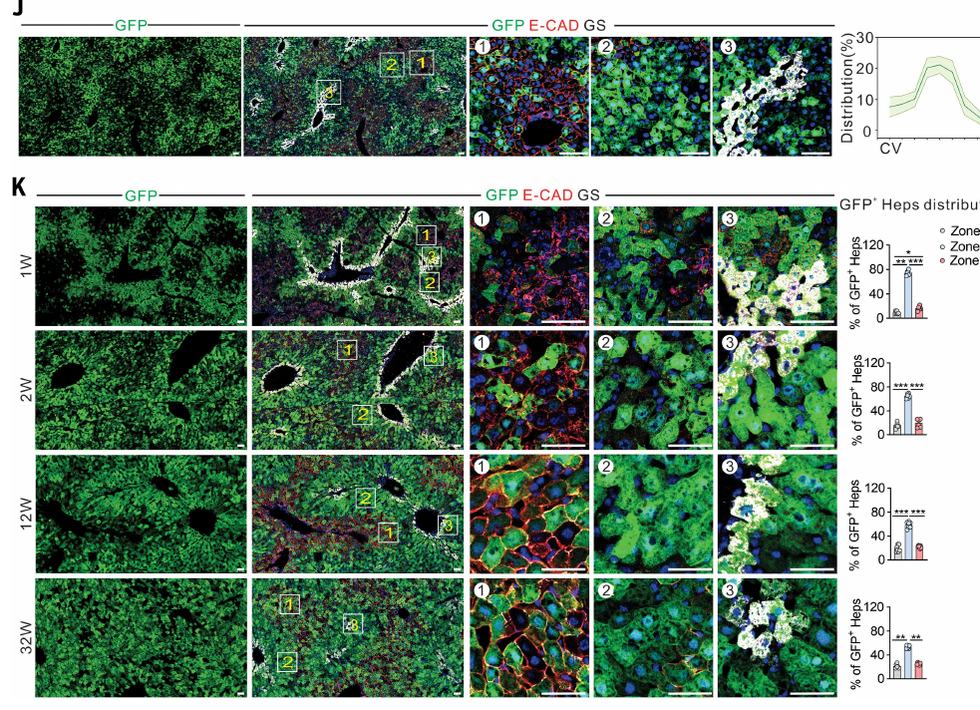
Fig.1J-K:DPP4 lineage zonal distribution and homeostatic expansion。
读图要点:Dpp4 expression、marker discovery、Dpp4-CreERT2 tool 和 hepatocyte specificity 为后续 lineage tracing 铺底。
Fig.2 - DPP4+ hepatocytes 是 PHx 后的 regenerative pool
lineage gate从 marker 推进到真实参与再生的细胞池。
Fig.3 - DPP4+ zone 2 是 mechanical hotspot
mechanical premise把标题中的 mechanosensing 建立在可测的 tension、contractility 和 stiffness 上。
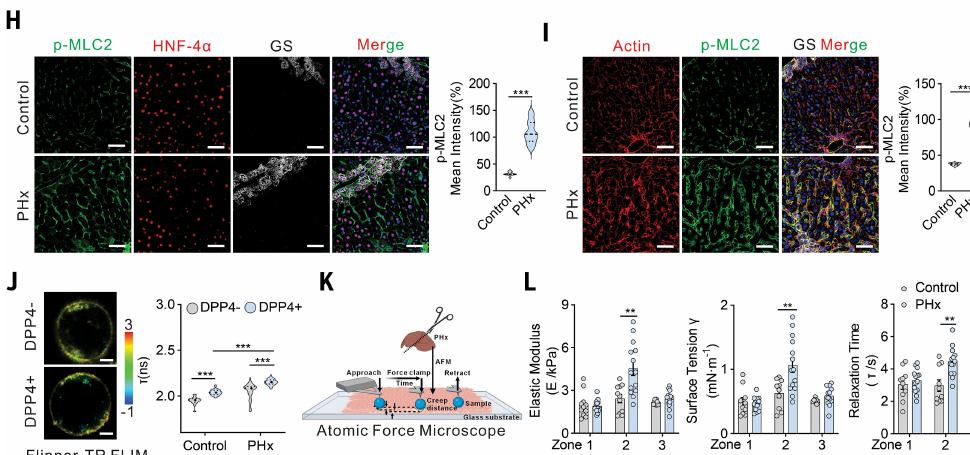
Fig.3H-L:DPP4+ zone 2 hepatocytes form a mechanical hotspot。
读图要点:DPP4 lineage 和 Ccnd1 zone 2 tracing 均显示 PHx 后 zone 2 hypertrophy。
读图要点:Laser microdissection 连接 mechanical hotspot 与 mechanotransduction gene expression。
Fig.4 - PIEZO1 是 spatially restricted mechanosensor
mechanosensor证明 PIEZO1 与 DPP4/zone 2 空间重合,并能响应 Yoda1 与 stiffness。
Fig.5 - PIEZO1 对 zonated regeneration 必要
necessity多套遗传系统和 knockdown 系统回答 PIEZO1 是否必要。
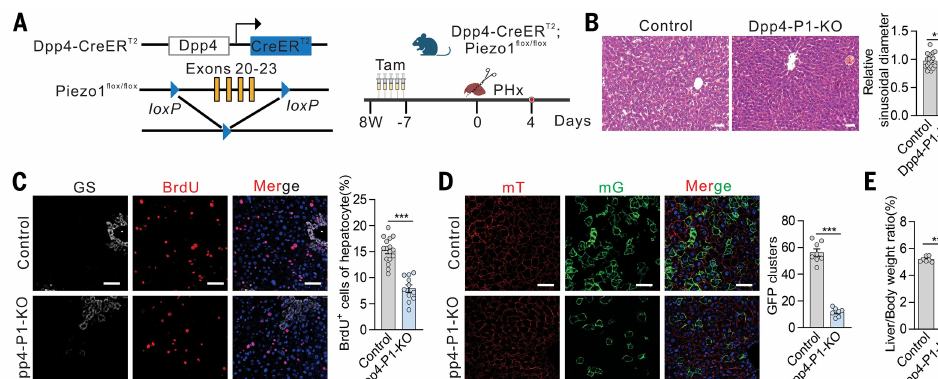
Fig.5A-E:Dpp4-lineage Piezo1 deletion impairs PHx regeneration。
读图要点:Zone 2-specific Piezo1 KO 排除只由 Dpp4-lineage 工具导致的解释。
读图要点:AAV shPiezo1 提供 acute knockdown 方向的独立验证。
Fig.6 - PIEZO1 gain of function 增强再生
sufficiency用 GOF 证明增强 PIEZO1 signaling 足以提高 regrowth/repair,并引出 IGFBP2。
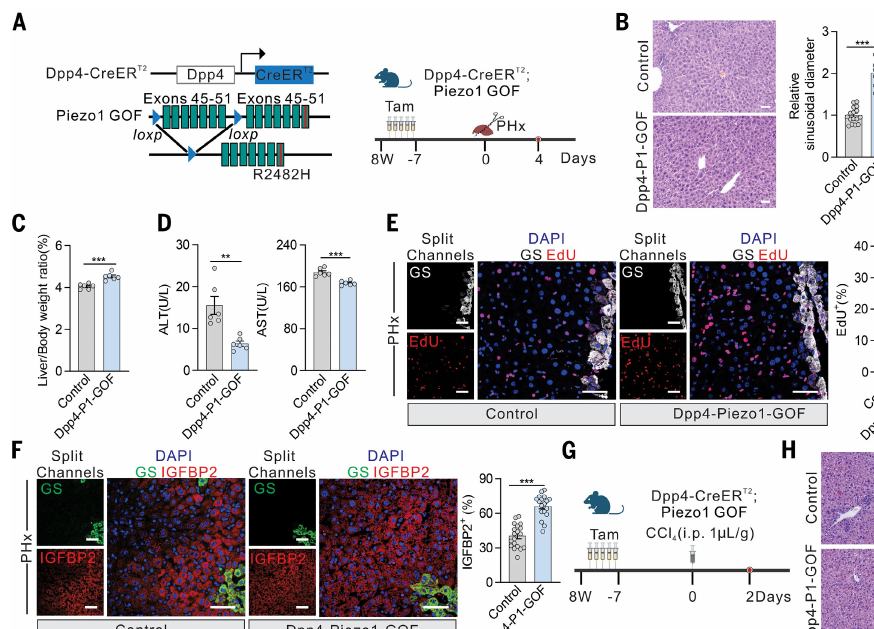
Fig.6A-F:PIEZO1 gain of function enhances regrowth and IGFBP2。
读图要点:CCl4 injury 和 zone 2-restricted GOF 让 sufficiency 证据跨模型成立。
Supplementary evidence 精读
公开版只保留一张 supplementary representative image,其余补图作为证据索引;full 版保留 S1-S12 figure-area crops。
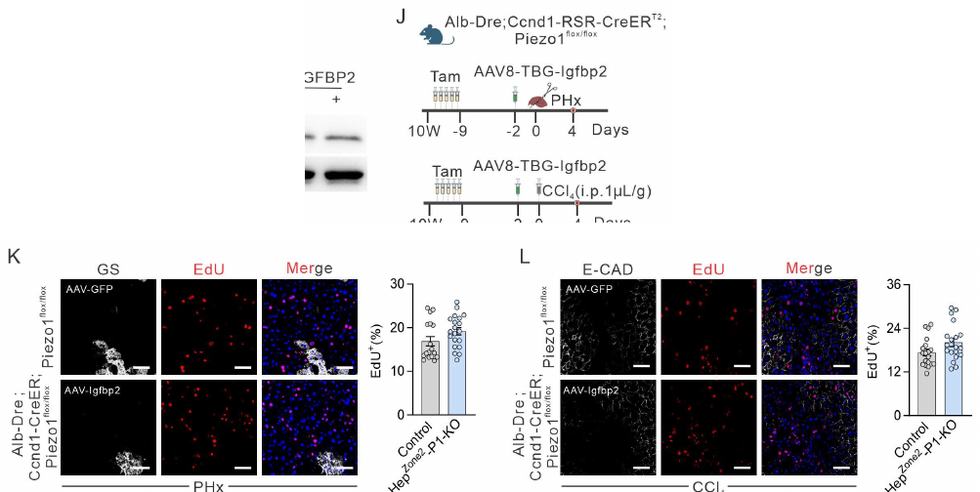
Fig. S8J-L:IGFBP2 AAV rescue downstream of PIEZO1, cropped/compressed/rearranged。
读图要点:这些补图分别支撑 marker specificity、injury model extension、NFATC3/YAP/TAZ mechanism 和 GOF safety/function controls。
DPP4 discovery from mouse/human datasets and zonation context。
DPP4 labeling specificity across tissues and liver cell types。
DPP4+ hepatocyte clonal/proliferative pool validation。
hypertrophy-induced PIEZO1 activation and EGFR/tension controls。
PIEZO1 deletion、Dooku1 inhibition and control experiments。
acute CCl4 injury and adaptive zone 2 regeneration。
chronic CCl4 injury and proliferative requirement。
IGFBP2 downstream effector and AAV rescue。
NFATC3 mechanism downstream of PIEZO1-Ca2+。
YAP/TAZ dependency and downstream branch。
PIEZO1 GOF safety, architecture and function controls。
PIEZO1 GOF upregulates IGFBP2 in PHx and CCl4。
Source Data / Supplementary Tables 索引
这一节固定采用 Dinghai-style compact index:三张 overview cards + 折叠详情 + 标签。不把 Excel sheet 原样铺满页面;完整 inventory 见同目录 zonated-piezo1-liver-regeneration_supplementary_inventory.md。
Dpp4 expression、Igfbp2/Hamp enrichment、mouse/human zonation、cholangiocyte specificity。
Egfr、Igfbp2、Nfatc3 expression and spatial distribution。
Supplementary PDF tables、RT-qPCR primers、gel stiffness recipe、reporting checklist。
marker and zonation data:Tables S3-S8
Table S3Dpp4 expression in hepatocytes from regenerating mouse livers;18,641 x 2。支撑 DPP4 marker 与 regeneration expression 入口。
Table S4Igfbp2 and Hamp expression between DPP4- and DPP4+ hepatocytes;362,955 x 8。支撑 DPP4+ vs DPP4- 的 Igfbp2/Hamp enrichment。
Table S5Spatial distribution pattern of Dpp4 expression in mouse liver;2,244 x 7。支撑 DPP4 沿 mouse liver zonation 的空间分布。
Table S6Zonation genes expression in human and mouse DPP4+ hepatocytes;32,740 x 9。用于 human/mouse DPP4+ hepatocytes zonation comparison。
Table S7Dpp4, Hamp, Hamp2, Igfbp2, and Ccnd1 expression in mouse cholangiocytes;871 x 3。用于 cholangiocyte/off-target marker control。
Table S8Spatial zonation profile of DPP4 expression in human liver;1,813 x 4。支撑 human liver 中 DPP4 spatial zonation。
mechanosensing and downstream expression:Tables S9-S12
Table S9Egfr expression in mouse DPP4- and DPP4+ zone 2 hepatocytes;89,044 x 3。对应 hypertrophy / EGFR control 线索。
Table S10Igfbp2 expression in DPP4- and DPP4+ hepatocytes in regenerating livers;349,244 x 3。支撑 regenerating liver 中 DPP4+ cells 与 IGFBP2 轴。
Table S11Nfatc3 expression between mouse DPP4- and DPP4+ hepatocytes;25,919 x 3。支撑 NFATC3 downstream transcription factor 线索。
Table S12Spatial distribution pattern of Nfatc3 expression in mouse liver;5,763 x 4。支撑 NFATC3 spatial distribution 与 zone interpretation。
reproducibility context:Supplementary PDF + MDAR
Table S1 in supplementary PDFComposition of polyacrylamide gels of different stiffness。用于 hydrogel stiffness culture 的材料和 stiffness recipe 复核。
Table S2 in supplementary PDFPrimer sequences used for RT-qPCR analyses。用于复核 Dpp4、Piezo1、Igfbp2、Nfatc3 等 expression readouts。
MDAR checklist5 页 reproducibility/reporting checklist。作为 reporting context 记录,不并入主证据链。
Supplementary PDF Figs. S1-S12补图证据覆盖 specificity、injury extensions、IGFBP2/NFATC3/YAP/TAZ mechanism 和 GOF safety/function controls。
Public 版不重发表格原始数据、不提供 workbook 下载、不复制大表内容;full 版也只保留 sheet 级索引,避免形成 Excel wall。
总结与延伸
文章把 liver zonation、hepatocyte hypertrophy 与 mechanotransduction 放在同一条再生逻辑里。
PIEZO1 既有 loss-of-function,也有 gain-of-function,证据链比单向 perturbation 更完整。
Ca2+-NFATC3 / IGFBP2 让 PIEZO1 不停留在 channel identity,而是接到 proliferative program。
可借鉴研究思路
- marker-to-lineage-to-physics-to-perturbation:先找细胞池,再做 lineage,再测局部机械状态,最后做遗传因果。
- 多尺度机械测量:FLIM membrane tension、p-MLC2/actin、AFM mechanics 回答不同层级的问题。
- 公开呈现边界:这篇文章同时包含主图、补图、大表和明确的版权约束,适合作为 Research Note 发布规则的验证案例。
不足、风险与开放问题
- DPP4 marker 边界:DPP4 是 enrichment marker,不应写成绝对纯的 zone 2 marker。
- 人类证据边界:human support 主要来自 reanalysis / spatial transcriptomic context,核心因果实验仍在小鼠。
- IGFBP2 作用边界:rescue 证据强,但 autocrine、paracrine 与 niche remodeling 的相对贡献仍可继续拆。
- YAP/TAZ branch:它是 mechanotransduction 重要分支,但在本文中不是唯一主轴终点。
后续实验设想
- 用 cell-type-specific Igfbp2 perturbation 拆 autocrine / paracrine 作用。
- 在 chronic injury 或 aging liver 中测试 DPP4+ zone 2 PIEZO1 轴是否仍然成立。
- 在人类肝损伤样本中用空间转录组 + 免疫染色验证 PIEZO1 / IGFBP2 / NFATC3 组合信号。
- 把 AFM / membrane tension readout 与 live lineage tracing 更直接地连接起来。