Tissue tension fosters macrophage-driven lipid peroxidation-induced DNA damage
个人文献精读 Research Note,用于梳理论文证据链、图像逻辑、supplementary data 与可迁移研究思路。
Mary-Kate Hayward; Jason J. Northey; Valentina Opazo-Mellado; Connor Stashko; Ori Maller; Alastair J. Ironside; Xuchu Que; Jonathon N. Lakins; E. Shelley Hwang; Joseph L. Witztum; Hugo Gonzalez; Valerie M. Weaver
Cancer Cell 44, 1255-1269 (2026)
Copyright 2026 Elsevier Inc. All rights reserved. Public edition keeps only a small set of low-resolution cropped guide images and points readers back to the DOI.
Morgen · tomorgene.com
公开导读版:6 张低分辨率代表图 + 24 个 panel-group 占位/索引卡;robots noindex,nofollow。
一句话:fibrotic/stiff tissue 先通过 epithelial STAT3 招募 macrophages,再让 macrophages 在高张力环境中发生 ROS-driven lipid peroxidation,释放 HNE/MDA/acrolein-like aldehydes,最终造成 epithelial DNA damage 和 mutation-associated consequences。
- Fig.1 建立 stiffness/fibrosis 与 DNA damage、repair programs、frameshift consequences 的关联和扰动证据。
- Fig.2 解释 macrophage recruitment 的入口:epithelial STAT3 和 chemokine/cytokine output。
- Fig.3-Fig.4 把 macrophage recruitment 转成 lipid peroxide-derived aldehyde causality。
- Fig.5 与 Figure S9 将机制外推到 pre-tumour stiff tissue 和 high mammographic-density human risk tissue。
名词解释
这些术语按机制、模型和数据口径分组,目标是让读者能直接回到 Fig.1-5 与 supplementary/source-data evidence。
核心机制 读懂主图必备
组织级机械张力来自 ECM crosslinking、collagen deposition 和 stromal stiffening,是连接 fibrosis 与 DNA damage 的入口。
胶原沉积、交联和 remodeling 形成的硬化基质;本文把它视为炎症和突变负担的上游环境变量。
用 AFM 或 STIFMap 量化的基质弹性;读图时要区分 tissue-level stiffness 与单个细胞内张力。
硬基质通过 integrin/focal adhesion/actomyosin 等路径改变上皮和巨噬细胞状态。
硬基质和 IL-6/JAK1 输入共同提高 epithelial pSTAT3,进而诱导 macrophage-recruiting chemokines。
fibrotic tumours 的 CD163+ / F4/80+ macrophage 增加,是 DNA damage 与 inflammation 的空间桥梁。
ROS 氧化 PUFA-containing lipids,生成 OxPL 和 downstream aldehydes,是 macrophage tension response 的核心化学环节。
oxidized phospholipids;E06 antibody/scFv 既是检测工具也是中和工具,帮助把相关性推进到干预证据。
更稳定、可扩散的 lipid peroxide-derived aldehydes,可形成 DNA adducts 并触发损伤反应。
双链断裂和 DNA damage response readouts;本文反复用它们确认 epithelial DNA damage。
oxidative DNA damage marker,与 stromal stiffness 和 macrophage/aldehyde 轴相互支撑。
TCGA 和 p53null WES 中的 TMB、frameshift InDels、SBS signatures,用来连接即时 DNA damage 和长期基因组后果。
中和 OxPL 的 mouse model;能降低 HNE/MDA、γH2AX、8OHdG 和 tumour content,是 Fig.4 的关键因果工具。
detoxifies lipid peroxides;myeloid Gpx4 deletion 提升 macrophage lipid peroxidation 与 epithelial DNA damage。
实验模型/场景 定位实验场景
人群层面关联 fibrosis signature、TMB、TAM signatures 和 mutational signatures。
从 collagen morphology 预测局部 stromal elasticity,并与 pFAK/pMLC/pSTAT3/HNE/γH2AX 等空间 marker 相关。
spontaneous mammary tumour model;用于 LOX inhibition、anti-CSF1、Stat3 KO、E06-scFv 等 in vivo 干预。
用 soft 或 L-ribose crosslinked stiff Col1/BM hydrogel 控制 stromal stiffness,避免只做相关性。
抑制 lysyl oxidase 降低 collagen crosslinking 和 tissue tension,是降低 DNA damage 的反向扰动。
depletes macrophages;用于证明 macrophage abundance/function 参与 epithelial DNA damage。
mammary epithelial Stat3 knockout;把 tissue tension 与 chemokine-mediated macrophage recruitment 连起来。
400 Pa 与 6 kPa collagen-conjugated polyacrylamide gels,用于体外测试 stiffness 对 epithelial STAT3 和 macrophage ROS 的直接影响。
macrophage cell systems,用于 dissect FAK/NOX/mitochondrial ROS 与 lipid peroxidation。
mammary tumour epithelial cells,用于测试 HNE 或 BMDM conditioned media 是否足以诱导 γH2AX。
myeloid-specific Gpx4 deletion 模型,证明 macrophage lipid peroxide detoxification 能限制 DNA damage。
collagenase-resistant collagen I model,支持硬化 mammary tissue 本身可提高 DNA damage and risk markers。
high-MD human breast tissues 是 cancer-risk 场景,连接 mouse mechanism 与风险人群。
方法与数据口径 回到图注与 source data
直接测量 tissue stiffness;读 Fig.1 和 supplement 时要注意 top 10% modulus 与 bulk distribution 的不同。
PSR polarized-light readout 量化 fibrillar collagen area,是 fibrosis/stiffness 的组织学支撑。
collagen-binding probe,用于 IF 中标记 collagen morphology 并支持 STIFMap。
空间证据主力;区分 epithelial marker Pan-CK、macrophage marker CD163/F4/80 和 oxidative markers。
flow/cell-culture lipid peroxidation readout;注意 gating 到 macrophages 而不是总肿瘤细胞。
用于拆解 macrophage ROS 来源;本文强调 stiffness-induced ROS largely NOX-dependent。
bulk aldehyde readout;需要和 HNE IF、BMDM conditioned media 实验一起读。
用于观察 stiff tumours 中 gene-level frameshift disruption 和 mutation heterogeneity。
将 fibrosis 与 acrolein/SBS8/SBS17b/SBS32 等 mutational signatures 关联。
用于 fibrosis/TAM/DNA repair signatures,不等同于因果,需要与 in vivo perturbation 配对。
Fig.2 中把 Stat3 loss 和 chemokine/cytokine output 连接到 macrophage recruitment。
DSB/NER gene signatures 和 primer sequences;适合索引,不适合在页面中做大表墙。
原文记录 flow cytometry gating strategy/source data 的外部数据位置,公开页只做 reproducibility map。
科学问题与总体模型
文章解决的问题是:fibrosis 与 chronic inflammation 为什么能转化为更高 cancer risk 和 progression?作者提出的核心答案不是单一炎症因子,而是 tissue tension 驱动的 epithelial-macrophage-lipid aldehyde-DNA damage cascade。
collagen deposition/crosslinking raises local tissue tension.
mechanical and inflammatory inputs increase pSTAT3 and chemokines.
TAMs accumulate near epithelial DNA damage and stiff stroma.
stiffness promotes macrophage ROS, OxPL and aldehyde production.
diffusible aldehydes induce epithelial DNA damage and mutation-associated readouts.
Fig.1 · Fibrosis and tissue tension associate with DNA damage and mutation-related readouts
证据角色建立 stiffness -> DNA damage / mutational consequence 的现象层。
人类 BRCA 队列、STIFMap、PyMT LOX inhibition 与 p53null soft/stiff model 一起说明:硬化/纤维化基质与 epithelial DNA damage、DNA repair programs 和 frameshift disruption 相关。
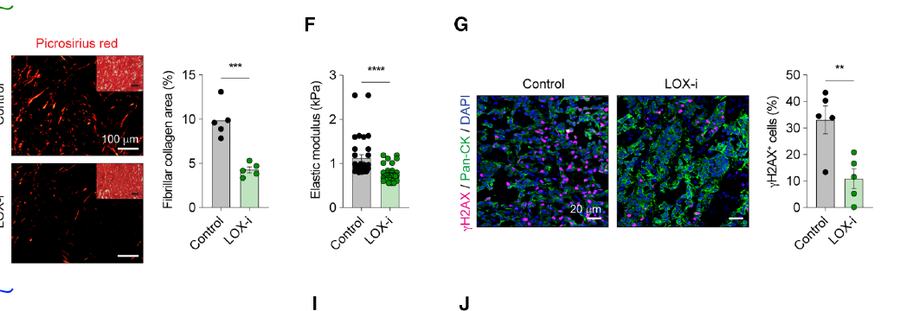
Fig.1e-g:LOX inhibition lowers collagen/stiffness and epithelial γH2AX in PyMT tumours。
读图要点:human cohort and STIFMap establish the correlation between fibrosis, stiffness and DNA damage.
读图要点:orthotopic soft/stiff p53null model separates engineered stiffness from ordinary tumour correlation.
读图要点:DNA repair enrichment and frameshift readouts turn marker-level DNA damage into genome-level consequence.
怎么看
- 先把 human cohort/STIFMap 关联与 mouse perturbation 分开读,避免把全部证据当作同一层级。
- LOX-i 和 soft/stiff p53null 是关键:前者降低 crosslinking,后者主动升高 stiffness。
- DNA repair / InDel readouts 说明 γH2AX 不是孤立 marker,而是可连接到 mutation consequences。
Fig.2 · Tissue tension activates epithelial STAT3 to recruit macrophages
证据角色解释 stiffness 如何招募 macrophages。
Fibrosis/TAM signatures 与 CD163+ macrophages 关联;anti-CSF1 和 epithelial Stat3 KO 降低 macrophage abundance、fibrosis/stiffness 与 γH2AX,说明 STAT3-chemokine axis 是 tension 与 macrophage recruitment 的桥梁。
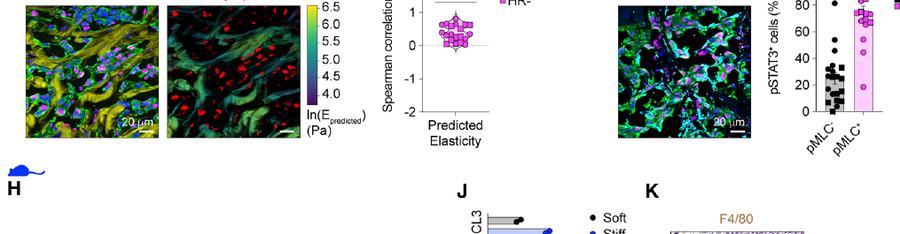
Fig.2g-i:stromal elasticity correlates with epithelial pSTAT3, and pSTAT3 enriches in contractile pMLC+ epithelial cells。
读图要点:TCGA and STIFMap connect fibrotic/stiff tumours with TAM infiltration.
读图要点:anti-CSF1 puts macrophages upstream of collagen/stiffness and epithelial DNA damage readouts.
读图要点:Stat3 KO reduces chemokines, macrophages and γH2AX, making STAT3 an axis rather than a marker.
怎么看
- Fig.2 的逻辑是 recruitment axis:stiffness -> epithelial STAT3 -> chemokines -> macrophages。
- anti-CSF1 和 Stat3 KO 分别从 immune cell 与 epithelial transcription factor 两端测试必要性。
- pMLC+ cells 中 pSTAT3 enrichment 是 mechanotransduction 与 inflammatory transcription 的桥。
Fig.3 · Stiffness induces macrophage lipid peroxidation and diffusible aldehydes
证据角色把 macrophage recruitment 变成 genotoxic chemistry。
stiff p53null tumours and stiff PA gels elevate macrophage ROS/lipid peroxidation;HNE/MDA/acrolein-like aldehydes link macrophage oxidative stress to epithelial DNA damage。
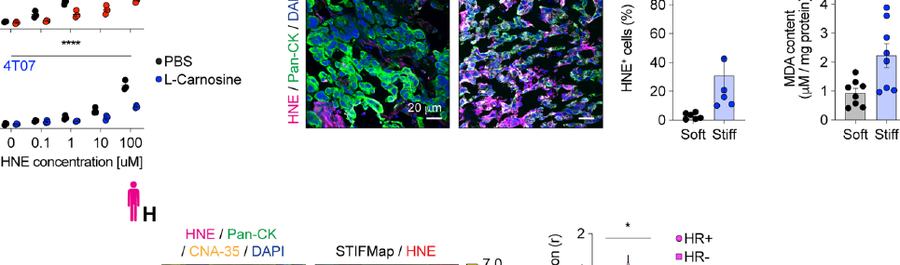
Fig.3e-g:HNE damages mammary tumour cells and stiff tumours accumulate epithelial HNE/MDA。
读图要点:8OHdG makes oxidative DNA damage part of the stiffness story.
读图要点:macrophage-specific lipid peroxidation is the transition from tissue mechanics to chemical genotoxicity.
读图要点:HNE-STIFMap closes the human-spatial evidence loop.
怎么看
- BODIPY C11 gating 到 macrophages 是关键,因为 tumour cells 并不是主要 lipid-peroxidation 来源。
- FAK-i/NOX-i controls 说明 stiffness-induced ROS 不是泛泛 oxidative stress,而有 mechanosensitive source。
- HNE 和 MDA 把短寿命 ROS 转换成可扩散、可致 DNA adduct 的 aldehyde mechanism。
Fig.4 · OxPL neutralization and myeloid Gpx4 loss causally tune epithelial DNA damage
证据角色核心因果图:OxPL/lipid aldehyde axis is necessary and sufficient-like across interventions。
E06-scFv neutralizes OxPL and lowers HNE/MDA/γH2AX/tumour content;myeloid Gpx4 KO has the opposite effect, increasing aldehydes, DNA damage, metastasis and mutation-pattern changes。
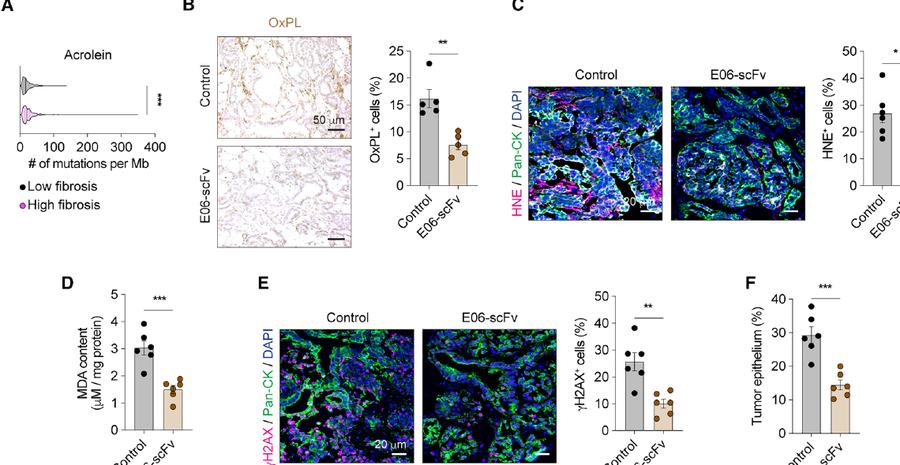
Fig.4a-f:fibrotic tumours show acrolein signature contribution, and E06-scFv lowers OxPL/HNE/MDA/γH2AX/tumour content。
读图要点:myeloid Gpx4 KO is the gain-of-function counterpart to E06-scFv neutralization.
怎么看
- E06-scFv 是 loss-of-function-like 干预:neutralize OxPL 后 HNE/MDA/DNA damage/tumour content 下降。
- myeloid Gpx4 KO 是 gain-of-function-like 干预:macrophage lipid peroxides 上升后 epithelial damage 增加。
- SBS/Ti-Tv/T>G readouts 不等同于直接机制,但支持 aldehyde/oxidative lesion 的 mutational footprint。
Fig.5 · High-risk fibrotic breast tissues show macrophages, HNE and DNA damage
证据角色把机制外推到 cancer-risk tissue context。
pre-tumour stiff p53null tissues and high mammographic-density human breast tissues show elevated HNE and γH2AX, connecting tumour progression mechanism to cancer-risk tissue states。
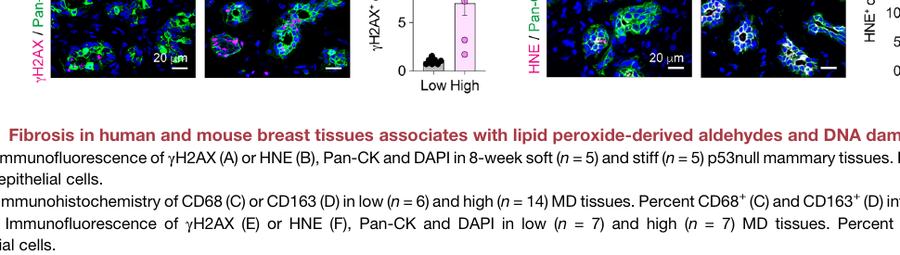
Fig.5e-f:high mammographic-density human breast tissues show higher epithelial γH2AX and HNE。
读图要点:mouse pre-tumour tissues show the axis before obvious tumour emergence.
读图要点:human high-MD tissues add macrophage inflammation to the risk-tissue readout.
怎么看
- pre-tumour mouse tissue 说明 axis 可先于 overt tumour 出现。
- high-MD human tissue 是 risk-context,不是肿瘤 endpoint;要看 macrophage + HNE + γH2AX 的组合。
- 本图把 tumour progression 机制外推到 cancer risk,但作者也承认需要更多 fibrotic disorders 验证。
Supplementary evidence 精读:代表截图与证据索引
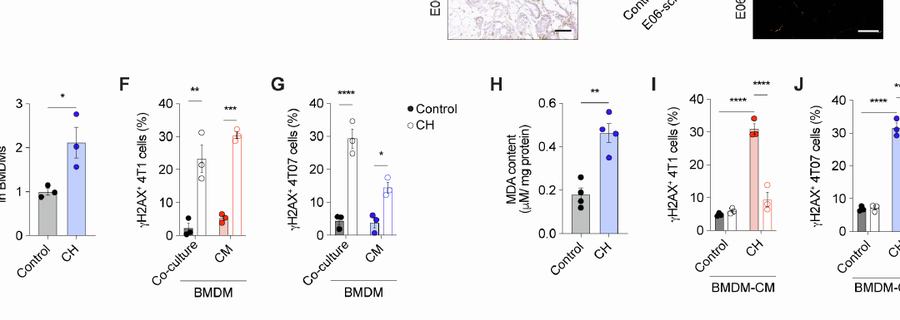
Figure S8e-j:BMDM-derived aldehydes are sufficient to transfer γH2AX-inducing activity to epithelial cells。
读图要点:human fibrosis, mechanosignaling, proliferation and non-proliferating γH2AX controls。
读图要点:LOX inhibition controls for mechanosignaling, proliferation, DNA damage and metastasis。
读图要点:soft/stiff p53null model validation and metastasis controls。
读图要点:DNA repair genes, DSB markers and mutational/KMT2D readouts。
读图要点:macrophage proximity to damaged epithelium and anti-CSF1 controls。
读图要点:STAT3 mechanosensing, chemokine axis and Stat3 KO stromal controls。
读图要点:macrophage ROS/lipid-peroxidation mechanism and HNE dependency controls。
读图要点:OxPL neutralization, BMDM aldehyde transfer and Gpx4 KO mutation/metastasis controls。
读图要点:pre-tumour stiffness and Col1a1/high-risk tissue controls。
读图要点:DSB sensing and repair gene signature;公开页只做 Source Data 索引。
读图要点:NER gene signature;公开页只做 Source Data 索引。
读图要点:RT-qPCR primer sequences;属于方法复现材料,不作为结果图展示。
Source Data / Supplementary Tables 索引
本节是 reproducibility map,不重发 raw source data,不把 Supplementary Table provenance 截图作为正文结果图。
fibrosis/TMB, AFM/STIFMap, LOX inhibition, p53null soft/stiff, DNA repair and frameshift readouts
mechanical-validation controls: outcome, AFM distributions, proliferation and metastasis across LOX and soft/stiff models
DSB sensing and repair gene signature used in Fig.1 repair-program interpretation
主图统计与图像数据 · 5 figures
- Fig.1
fibrosis/TMB, AFM/STIFMap, LOX inhibition, p53null soft/stiff, DNA repair and frameshift readouts
- Fig.2
TAM signatures, macrophage depletion, epithelial pSTAT3, chemokines and Stat3 KO phenotypes
- Fig.3
8OHdG, OxPL, BODIPY C11, FAK inhibition, HNE/L-carnosine and MDA assays
- Fig.4
acrolein signature, E06-scFv neutralization, myeloid Gpx4 KO, DNA damage and mutational spectrum
- Fig.5
pre-tumour stiff tissues, high-MD macrophages, HNE and γH2AX in human risk tissues
Supplementary evidence · 9 figures
- Figure S1-S3
mechanical-validation controls: outcome, AFM distributions, proliferation and metastasis across LOX and soft/stiff models
- Figure S4-S6
repair/mutation readouts, macrophage proximity, STAT3 mechanosensing and chemokine controls
- Figure S7-S9
ROS source, aldehyde transfer, OxPL/Gpx4 interventions, pretumour risk tissue and Col1a1 stiffening controls
Source Data / Supplementary Tables · 3 tables + external data
- Table S1
DSB sensing and repair gene signature used in Fig.1 repair-program interpretation
- Table S2
nucleotide excision repair gene signature used for NER GSVA interpretation
- Table S3
primer sequences for RT-qPCR validation in STAR Methods
- Mendeley Data
flow cytometry gating strategy/source data noted by article; not rehosted in public HTML
总结与延伸
创新点
- 把 fibrosis、mechanics、macrophage oxidative metabolism 和 epithelial mutagenesis 放进同一个可实验扰动的因果链。
- 用 E06-scFv 与 myeloid Gpx4 KO 从两个方向测试 OxPL/lipid aldehyde axis,而不是只报告 HNE/MDA marker。
- 将 high mammographic density 这种 cancer-risk tissue state 与 macrophage/HNE/γH2AX 机制读出连接。
可借鉴的研究思路
- 机制论文可以把 human spatial association、engineered mouse mechanics、cell-culture mechanistic dissection 和 mutational signatures 分层组合。
- 当 ROS 难以直接定位时,可转向更稳定的 downstream electrophiles/aldehydes,并用 scavenger 或 neutralization 模型验证。
- Source Data / Supplementary Tables 最适合做复核地图,而不是在公开页面中展开成 raw table。
开放问题
- breast-specific 机制是否能外推到 pancreatic, liver, lung 等 fibrosis-associated cancer risk 场景仍需要验证。
- aldehyde adducts 是否偏好特定 chromatin states 或 driver loci,当前仍是 discussion-level hypothesis。
- OxPL neutralization 是否可作为 high-risk tissue 的 prevention strategy,还需要安全性、时机和人群选择研究。